

One guitarist.
One cheat sheet
that got out of hand.
Started on a closet acoustic at 10. Didn't get my first electric until senior year. Adventure Guitar is what happened after I finally figured out how the instrument actually works.


Getting started, 2012
Started at 10. A cheap acoustic. No lessons.
Started in 2012 on a cheap acoustic that sat in the closet. No lessons, no plan — just picked it up and started figuring things out. For years I bounced between bad tab sites, scattered YouTube tutorials, and theory books that felt written for piano players.
Nothing connected. The sounds made sense. The why behind them didn't.

First electric guitar, senior year of high school
The electric changed everything.
Didn't get my first electric until senior year of high school. Suddenly everything felt more serious. And the gap between what I could play and what I understood became impossible to ignore.
That gap sent me deep into theory research — books, forums, YouTube, Reddit threads at 2am. Looking for anything that made the fretboard make sense.
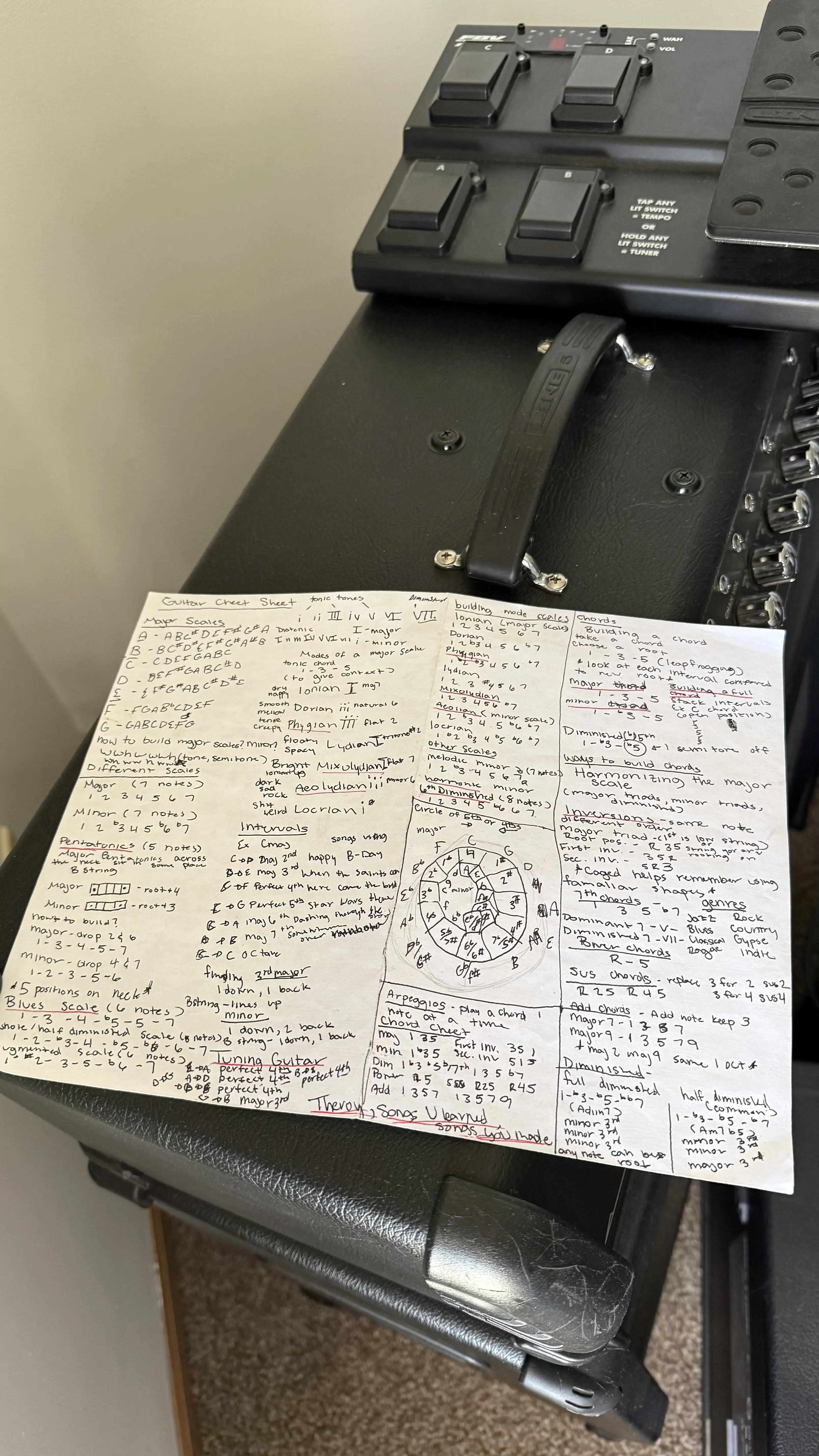
The original cheat sheet, 2019
One page. That's all I wanted.
The breakthrough was intervals. Once I started thinking about every note, chord, and scale through the 1–7 number system, the fretboard stopped being a mystery. Patterns I'd memorized for years suddenly had meaning.
Things I'd avoided — modes, chord extensions, improvising — became straightforward. I wanted one page that captured all of it. Something I could tape to the wall while practicing. I couldn't find it anywhere, so I made it.
"The breakthrough was intervals. Once everything ran through the 1–7 system, the fretboard stopped being a mystery."
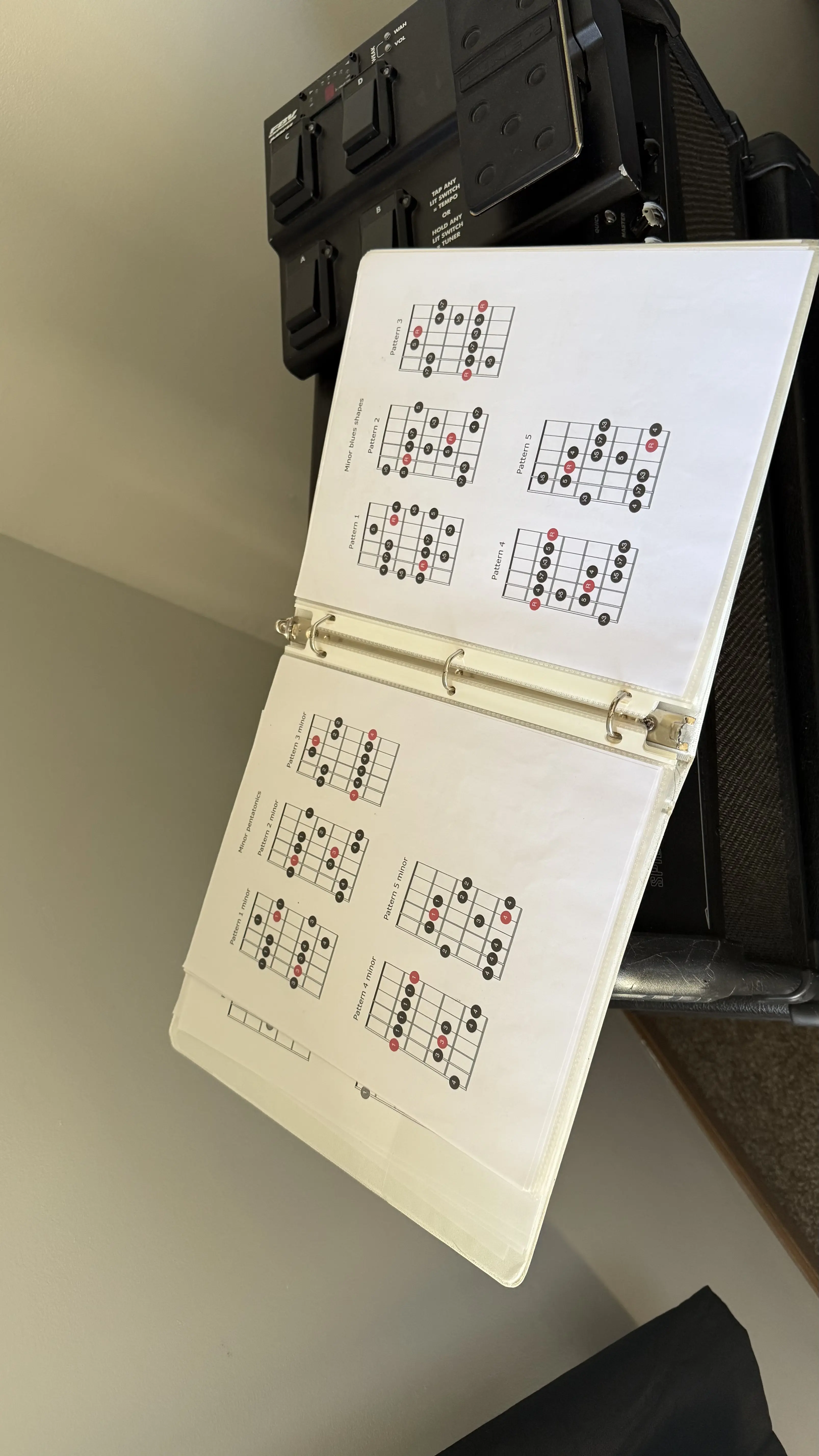
The binder that started it all
One page became a binder.
The cheat sheet kept growing. A page for chords. A page for modes. A page for pentatonic positions. A page for how all of it connected. Before long it was a full binder of reference sheets that lived on the music stand.
Other guitarists kept asking for copies. That's when I realized this wasn't just a personal project — there was a real gap nobody had filled. A reference built by a player, for players, that assumed you were smart enough to handle real information.
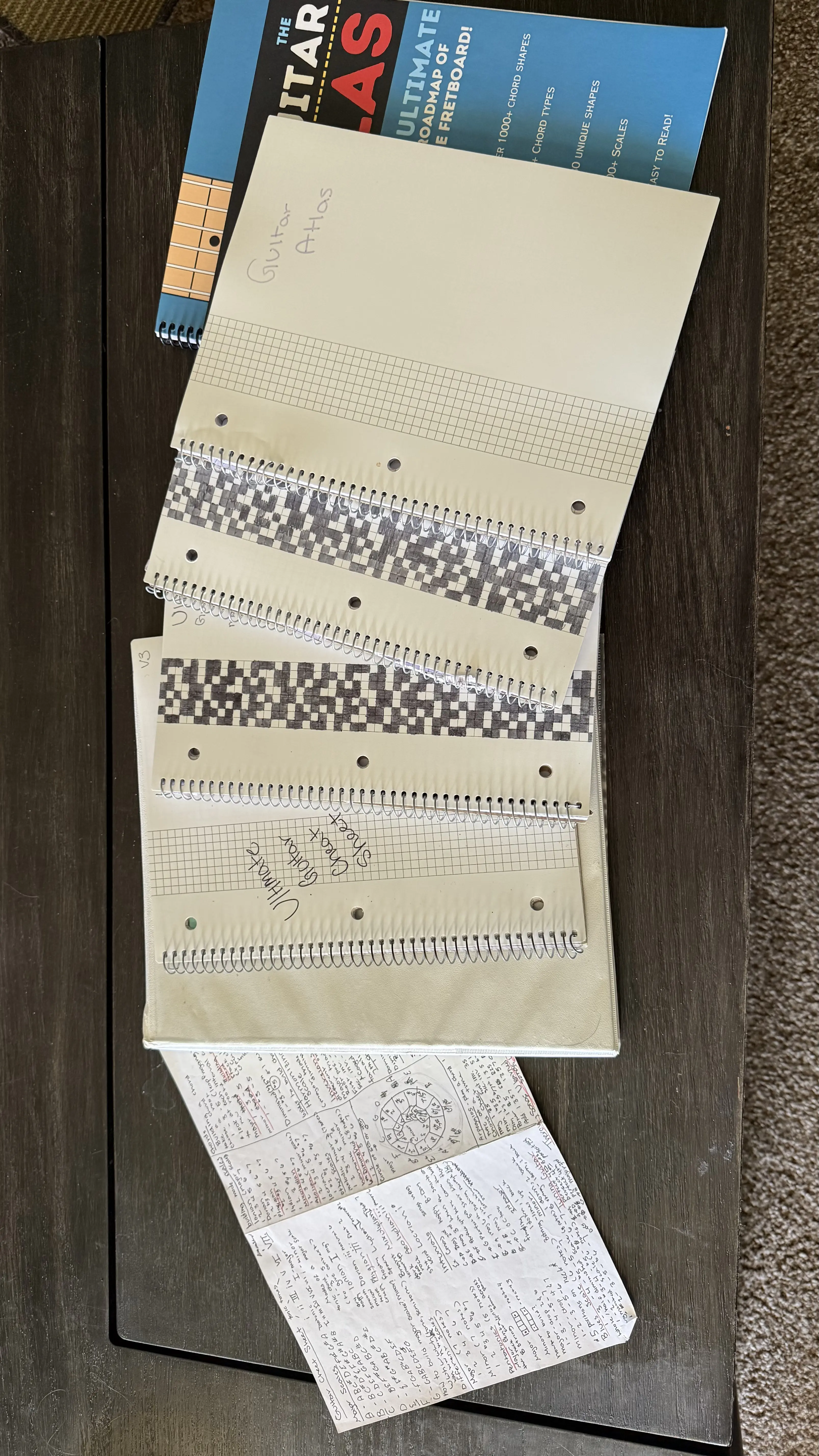
The five iterations before the final Guitar Atlas
Five tries to get it right.
The binder went through five complete redesigns. Each version got cleaner, more organized, more useful. The goal was always the same: every interval, chord, and scale laid out through the 1–7 framework so clearly that you couldn't miss the connections. Five tries. One book.
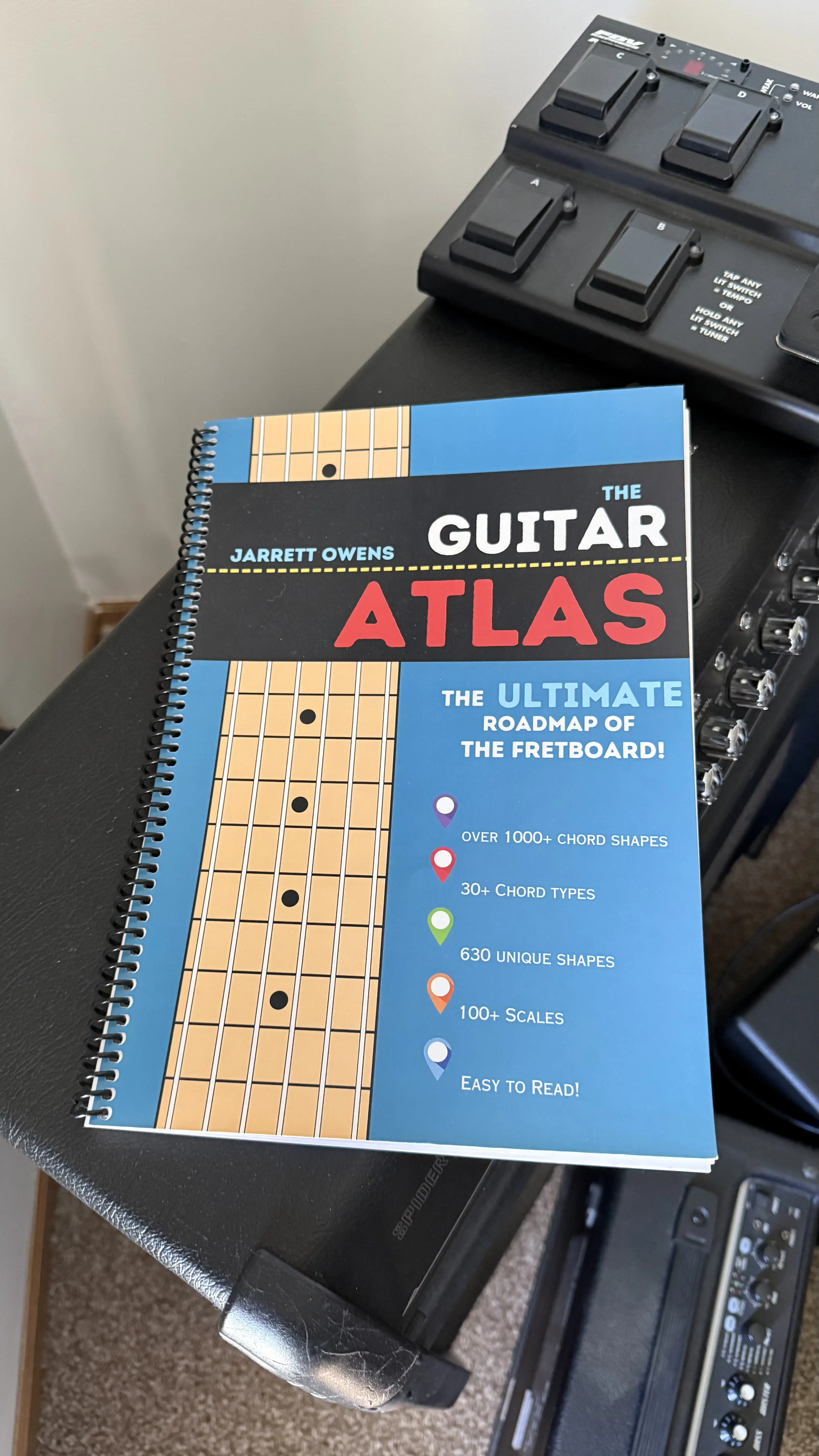
Guitar Atlas — the official release
The reference book I wish had existed.
Guitar Atlas is the finished version of that original cheat sheet — everything I wanted when I started, staring at the neck not understanding how anything connected.
No fluff. No "why music is fun" intro chapters. Just the information, charted clearly, in the order your hands need it. Intervals, chords, scales, and the combined 1–7 reference that ties it all together.
The book needed a home.
The site became the ecosystem.
Adventure Guitar launched in 2026 as the official home for all of it — the book, the tools, the lessons, the free guides. Everything built on the same framework. Everything connected.
The goal hasn't changed since that first cheat sheet: one place where a guitarist can go to understand how the instrument actually works, without having to piece it together from a hundred different sources.
Free first.
The tools, the guides, the foundational lessons — free. Always. Patreon and the book fund it so nothing gets locked away.
Real information.
No fluff, no oversimplification. Guitarists can handle real theory when it's explained clearly.
Everything connects.
The 1–7 number system runs through every tool, every guide, every lesson. Learn it once and it shows up everywhere.
Built to last.
Not chasing trends. Building references that are useful in five years, not five minutes.